
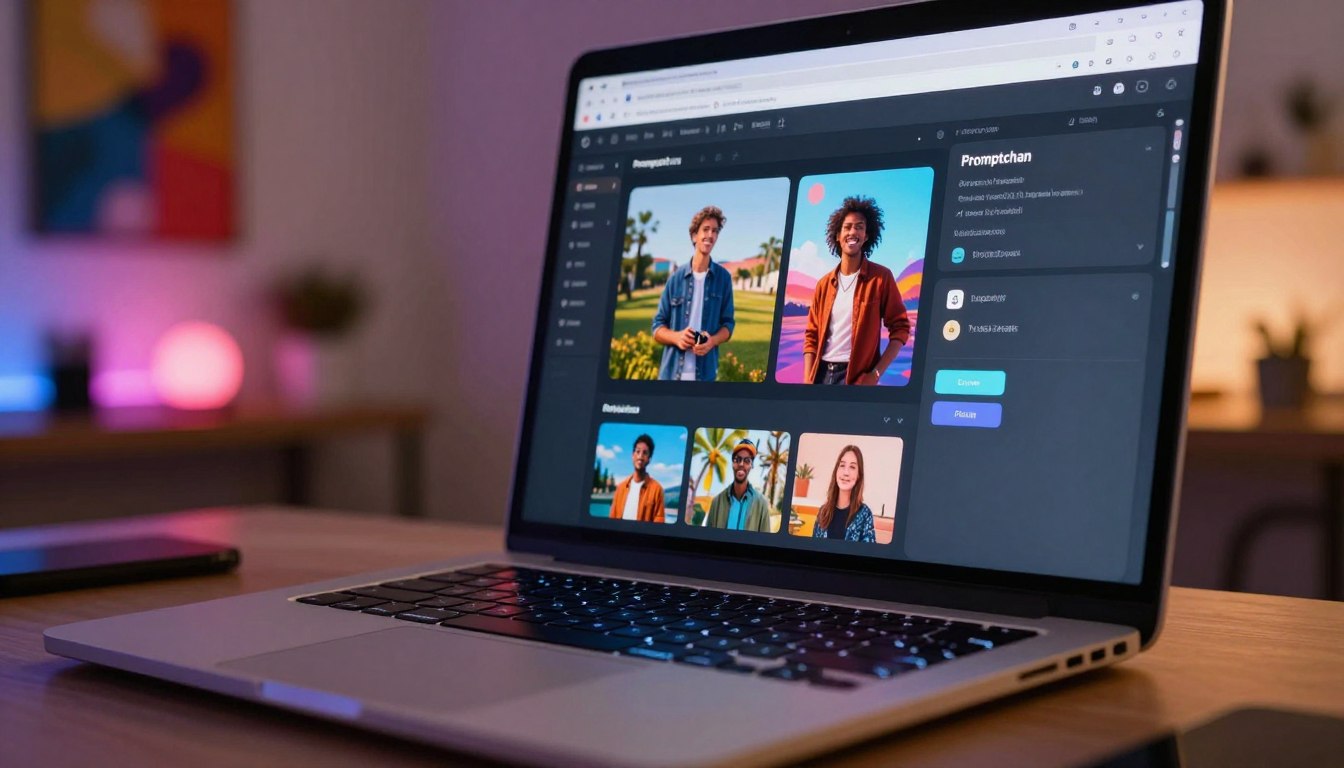
Curious how an uncensored image generator claims to turn simple prompts into explicit art — and whether it’s worth the trade-offs? This guide cuts through the noise to show what that platform actually does, who benefits most in the United States, and where limits appear in real use.
Launched in 2023, the service pitches itself as an adult-oriented NSFW image generation tool with tiered add-ons like chat, voice, GIFs, and video. Expect a prompt-to-result workflow that aims for speed and variety.
We’ll map the scope: core capabilities, workflow steps, output quality, pricing, and privacy concerns. You’ll see how it stacks against Stable Diffusion NSFW setups and NovelAI in practical terms.
Along the way, this hands-on review will teach you how to write better prompts, use gems and tiers wisely, and decide when to edit vs. regenerate. We also explain what “video mode” can realistically deliver.
Responsible use matters: the platform bans minors and raises real risks around likeness misuse and non-consensual deepfakes. This review evaluates speed, consistency, customization depth, and whether results hold up across scenes — not just a single lucky image.
Key Takeaways
- This review focuses on real-world results and trade-offs for a commercial audience.
- The core promise: uncensored NSFW image generation with optional community extras.
- Expect tier-based features (chat, GIFs, video) that affect price and output options.
- Responsible use is essential; likeness and deepfake risks are highlighted for U.S. users.
- We evaluate on speed, consistency, customization, and multi-scene reliability.
What Promptchan AI Is and Who It’s For
Read on to learn who the tool serves and how it fits into adult-oriented creative workflows.
Overview: This web-based platform focuses on uncensored NSFW image creation for adult content and creative exploration. It targets creators who need fast visual references, persona-driven art, and roleplay visualization.
Uncensored NSFW image generation for adult-oriented creation
“Uncensored” here means fewer automated filters than mainstream generators and a workflow tuned for explicit material. Expect a service that prioritizes adult freedom over family-safe defaults.
Best-fit users in the US market
Best suited to independent creators building avatars, roleplay planners, and anyone seeking quick visual inspiration for adult entertainment concepts and character art.
- Skip it if you need family-safe branding, strict corporate compliance, or photo-real commercial guarantees.
- Beginners can use presets and cloning to start quickly; advanced users refine prompts and edit for consistency.
- Practical access: web sign-up, daily gems (credits), and a simple generate-and-refine loop that gates output volume.
- Ethics matter: the platform allows users only in adult contexts, bans minors, and requires care around consent and likeness.
Promptchan AI at a Glance: Core Capabilities and Standout Claims
Below is a concise look at what the service actually delivers: core generation tools and the optional extras behind subscription walls.
Core offering: Text-to-image generation built specifically for explicit adult content. Launched in 2023, the platform focuses on quick outputs and iterative refinement so creators can go from prompt to usable images fast.
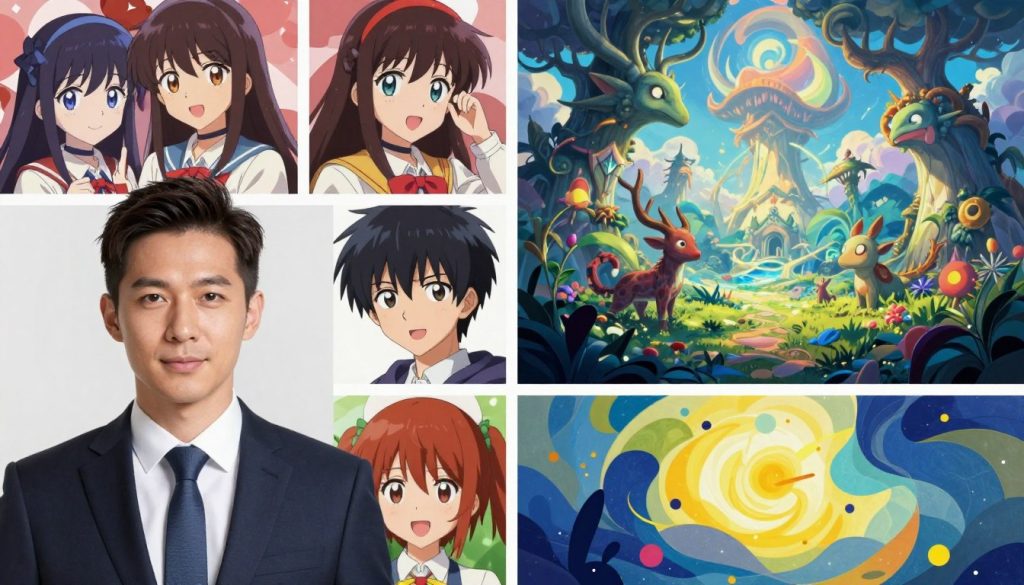
Primary styles: Expect four main style families—hyperrealistic, anime, fantasy, and photo-real/real. These styles cover most creative needs from stylized art to near-photographic results.
Beyond static images: Higher tiers unlock a small ecosystem of extras. Paid plans can include avatar/character chat, voice notes, GIFs, and a video mode for short clips. These features expand the creative workflow but vary in polish by tier.
“Uncensored output plus community presets and cloning are the platform’s key differentiators for adult creators.”
- Simple interface: type a prompt, choose a style, generate multiple options, then refine.
- Standout claim: fewer restrictions than mainstream tools and shared presets for faster starts.
- Trade-off: expanding into chat and video brings uneven quality; subscribers should test modes before committing.
Buying tip: Compare what each tier actually unlocks. Free access gives you the core generation loop, but character chat, higher-quality videos, and extra features usually sit behind paid plans.
How Promptchan Works: From Prompt to Finished Images
This short walkthrough explains the typical process so you can move from sign-up to consistent results without wasting credits.
Getting started and daily credits
Create an account, verify email, then claim your daily gems. Gems act as credits for every generate and regeneration action.
Tip: Decide whether to start from scratch or use a community preset to save time and gems.
Default workflow
Enter a prompt, pick a style, and generate a batch. Review outputs, tweak the prompt, then regenerate until you get usable images.
Keep iterations focused to avoid burning gems on brute-force generation.
Use the gallery and cloning
Browse the public gallery to find presets and copy a successful prompt. Clone settings let you remix instead of rebuilding the same idea.
“Cloning a tested prompt is often the fastest route to consistent results.”
Refining prompts and consistency tactics
Simplify flowery language. Prioritize a few key descriptors: subject, body details, lighting, setting, and camera angle.
- Keep a single base character description constant.
- Vary one element per iteration (outfit, pose, or background).
- Plan batch size to control gem spend.
| Step | Action | Why it matters |
|---|---|---|
| Sign-up | Create account, claim gems | Grants initial credits and access to presets |
| Prompt | Write concise prompts | Improves generation clarity and consistency |
| Batch | Generate multiple images | Offers choices without heavy rework |
| Iterate | Refine and regenerate | Focuses gems and hones the final result |
Image Quality and Style Options: Realistic, Anime, Fantasy, and More
Image quality shifts a lot between hyperreal, anime, and fantasy styles, so knowing each style’s strengths saves time and gems.
Hyperreal and real looks
What “good” looks like: believable skin texture, coherent lighting, and fewer uncanny facial artifacts when prompts stay simple and focused.
Keep prompts tight. Simple camera angles and one subject reduce errors and improve image generation consistency.
Anime and stylized art
Anime excels at crisp lines, expressive faces, and fast character concepting.
Watch for warped hands, floating accessories, or mismatched eyes on complex prompts.
Fantasy rendering and style wash
Fantasy shines with dramatic lighting and surreal settings but can apply a uniform filter across images, creating “style wash.”
Consistency checks and practical tips
Quick test: generate the same character in daylight vs. night, indoor vs. outdoor, and swap outfits to see if identity holds.
Remember: server load and model behavior can change results over time. Compare outputs across sessions — not just a single run.
“Paid tiers can speed queues, but better prompts and iteration still drive anatomy and detail.”
| Style | Strengths | Common Issues |
|---|---|---|
| Hyperreal/Real | Believable skin, natural lighting | Uncanny faces if prompts are cluttered |
| Anime | Expressive faces, quick concepting | Warped hands, inconsistent accessories |
| Fantasy | Dramatic scenes, surreal color | Style wash, repeated filters |
Character Creation and “Create Your Dream Girl” Customization
Designing a recurring character starts with a clear, repeatable set of traits you can lock and reuse. The “Create Your Dream Girl” tool acts as a form-based approach to creation, letting you pick defining features instead of relying only on freeform prompts.
Body, face, pose, clothing, and expression control
What you can set: body shape, facial features, hairstyle, pose, clothing, expression, and overall vibe. Use these customization options to build a consistent look, then iterate on details.
Build a base character to compare styles
Create and save a base character profile. Lock identity markers—face shape, hair color, and distinguishing features. Then change one scene variable at a time, like outfit or lighting, to compare results across styles.
Likeness, celebrities, and safer alternatives
Be cautious: requests that mimic real people can create legal and ethical risks, especially with NSFW content in the United States. Prefer “inspired-by” archetypes instead of copying identifiable faces.
“Save a stable profile and iterate in small steps to keep characters consistent across images and genres.”
- Workflow tip: lock identity, tweak outfit, then adjust lighting.
- Keep sensitive outputs private while testing.
- Deeper customization pays off when you need the same character across many scenes.
Prompting Tools, Presets, and Community Inspiration
Community-shared prompts help creators learn fast and cut down on trial-and-error.
The preset library reduces friction. Pick a theme, pose, or nsfw scenario and generate images without mastering prompt syntax on day one.
Browse the public gallery to find a look you like. The interface allows users to clone a prompt, tweak one or two details, then remix for their own creation.
How cloning and remixing work
Clone then modify: copy a gallery prompt, change the subject or lighting, and run a focused batch. This keeps gem spend low and results consistent.
Prompt improvement loop
Rate prompts that work, save wording that reliably produces a pose or composition, and build a personal library of known-good blocks.
“Using community prompts is the fastest way to learn which words produce consistent compositions.”
- Treat cloned prompts as templates, not final products; avoid copying identifiable faces without consent.
- Master one preset category (portrait, pose, or scene) before expanding to many styles.
- Community examples serve as inspiration and practical lessons in prompt wording and image composition.
| Feature | Benefit | Practical tip |
|---|---|---|
| Preset library | Saves time, reduces trial-and-error | Start with portrait or pose presets |
| Gallery cloning | Fast reuse of proven prompts | Clone then change 1 element per run |
| Rating loop | Improves future suggestions | Rate and save high-performing prompts |
Editing and Enhancement Tools: Inpainting, Upscaling, and Touch-Ups
Targeted edits let you fix small problems without wasting credits on whole new batches.
Inpainting is the go-to editing tool for region-specific fixes. Mask a problem area — a hand, face detail, or wardrobe edge — and regenerate only that segment. This keeps the rest of the image intact and reduces gem use.
Common fixes in NSFW generation include anatomy glitches (hands), facial asymmetry, wardrobe artifacts, and background tangles. Use inpainting for these precise repairs instead of full regeneration.
Upscaling and resolution controls decide final sharpness. Leave early iterations at lower resolution to save credits. Upscale only the chosen final image for download or publication.
When to regenerate vs. edit
Regenerate when composition, pose, or framing is wrong. Edit when the core image is right but details break immersion.
Efficiency tip: Targeted edits often save gems and time compared to repeated full-generation attempts. Editing isn’t magic; extreme artifacts may need a simpler prompt and a fresh batch.
| Task | Best Option | Why |
|---|---|---|
| Hand or facial glitch | Inpainting | Fixes local anatomy without losing the full image |
| Wrong pose/composition | Regenerate | Core layout must change; editing won’t correct pose |
| Final sharpness for publishing | Upscale | Saves gems during iteration, improves downloads |
Video and Animation Mode: What You Can Realistically Expect
Turning a still into motion works best when you keep the action minimal and controlled. The platform offers two entry points for short clips and simple animation. Both can add life, but each has trade-offs.
Start from a prompt or animate an existing image
You can generate a short clip directly from a prompt. This is fast but less predictable in identity and styling.
Or animate an image you already like. That gives you better control over the subject and keeps the character consistent.
- Prompt-driven generation: good for quick ideas, higher artifact risk.
- Image-based animation: best for consistent faces, outfits, and mood.
Keep motion subtle to avoid melting artifacts
Short, subtle moves work reliably. Think blinking, breathing, tiny head turns, or gentle shoulder shifts.
Avoid big gestures, running, or complex hand work. Ambitious motion often causes face morphing, clothing warping, and background instability.
“Small loops read as alive; big actions invite artifacts.”
| Motion type | Likelihood of artifacts | Best use |
|---|---|---|
| Blinking/breathing | Low | Portrait loops, avatars |
| Head turns (small) | Medium | Subtle expression change |
| Complex action | High | Not recommended |
Video features are often locked behind a higher tier and consume more gems than stills. Render times rise with duration and detail, so start short.
Practical workflow: perfect a still image first, then animate with low motion settings and brief duration. That process saves credits and reduces rework.
If you mainly need static art or consistent avatars, focus on image tools and editing. Spend on videos only if short clips serve your goals and the interface offers the control you need.
User Experience: Interface, Speed, and Everyday Workflow
A compact, mobile-friendly interface lets you move from idea to result in a handful of taps.
The core loop is simple: prompt → style → iterate. This works smoothly on phones and desktop. Most users learn it in minutes and can do short creative sessions between tasks.
Generation speed varies by time of day. Off-peak runs are fast. During peak hours, queues lengthen and the free tier shows the slowest performance.
Manage gems and waits: batch similar prompts, save good seeds, and prefer inpainting over full regenerations. That saves credits and time.
How to avoid overwhelm
Pick one style and one base character for a week. Use one preset category to build consistency. This limits decision fatigue and improves results.
- Organize favorites and reuse prompt fragments.
- Keep a short prompt journal of what worked.
- Use community prompts as inspiration, not templates to chase.
“Priority processing in paid tiers can matter if you iterate often or need faster cycles.”
| Area | Day-to-day effect | Quick tip |
|---|---|---|
| Interface | Mobile-friendly, clear generate button | Work in short sessions |
| Speed | Fast off-peak, slower on free tier | Schedule big batches off-peak |
| Community | Lots of inspiration, can be distracting | Save only reusable prompts |
Pricing, Free Tier, and the Gems Credit System
Understanding costs helps you match the right plan to your workflow and avoid surprise renewals.
Free tier basics: The free tier is $0 and gives 15 gems per day (reported). Expect slower queues and limited access compared with paid plans. It’s a good option for casual experimentation and learning prompt craft.
Subscription tiers and reported price points
| Plan | Price (USD) | What you get |
|---|---|---|
| Plus | $11.99 / month | 100 gems, faster queues — for occasional creators |
| Premium | $18.99 / month | 400 gems, priority processing — for regular users |
| Pro | $26.99 / month | 800 gems + unlimited casual generations + all features (video/voice) |
How the gems system works
Gems are usage credits. Each generation or higher-cost feature (like video, high-res upscales, or priority processing) consumes gems. Higher tiers increase monthly allotments and unlock more features.
Add-on gem packs and flexible options
Buy one-off gem packs if you want bursts of generation without subscribing. Packs range from 50 gems for $2.49 to 10,000 gems for $149.99. These are handy for sporadic projects or testing features that cost extra.
“Screenshot receipts and note renewal dates — some users report support or cancellation friction.”
Value guidance and decision checklist
- Free tier: Best for learning prompts and occasional image generation.
- Plus/Premium: Good if you generate weekly and need faster queues or more gems.
- Pro: Choose this if you need video/voice features and heavy monthly volume.
- Decision checklist: How many images per week? Do you need video/voice? Are editing tools essential?
Privacy, Safety, and Ethical Considerations for NSFW Generation
Before you share or save an image, understand the platform’s safety rules and privacy options.
Hard safety baseline: the service bans minors. This is non-negotiable and must guide every decision about content and characters. Treat that rule as absolute.
Deepfake and likeness risks in the U.S.: generating images that resemble real people can create reputational harm, civil claims, and state-level legal exposure for non-consensual intimate material. Courts and lawmakers are tightening rules, so avoid creating identifiable replicas.
Practical responsible-use guidance
- Avoid real names and identifying details; prefer fictional or clearly generic characters.
- Keep consent central — get explicit permission before depicting someone real.
- Use private mode and encrypted generation when working on sensitive material.
Gallery trade-offs and privacy controls
Sharing to the community gallery helps inspiration but widens footprint. Private access and encryption reduce exposure, yet the safest option is not to post sensitive images publicly.
“Uncensored features increase creative options and responsibility in equal measure.”
Promptchan vs. Alternatives: Where It Wins and Where It Falls Short
Choosing between web-first generators and self-hosted setups comes down to control, convenience, and cost.
How it compares with Stable Diffusion NSFW setups, NovelAI, and similar tools
The hosted platform favors a simple web interface and fast iteration. Self-hosted Stable Diffusion setups give you deeper model control and local reproducibility, but they require hardware and maintenance.
NovelAI and other subscription services sit between: more polish than DIY, less raw control than local models.
Strengths: uncensored output, customization, community cloning
Why many users pick it: uncensored NSFW output, quick character customization, and community cloning that shortens the learning curve.
Customization options and community prompts reduce trial-and-error and speed image generation for roleplay visuals and avatars.
Trade-offs: inconsistent complex prompts, server overload, support friction
Complex prompts can produce inconsistent results compared with finely tuned local models. Peak times may slow the interface and increase queue times.
Some users report uneven support and cancellation friction. That affects long-term trust for heavy creators.
“If you want plug-and-play with community templates, this tool is compelling; choose local SD workflows when you need maximum repeatability.”
| Decision area | Hosted platform | Self-hosted / SD |
|---|---|---|
| Control | Low management, faster start | High control, needs upkeep |
| Consistency | Good for quick sets, variable on complex prompts | Better repeatability with tuning |
| Cost | Gems/subscriptions | Hardware + time investment |
Practical buyer rule: pick the platform if you want plug-and-play generation and strong community templates. Choose local setups when precise, repeatable control and deeper customization are essential for production pipelines.
Conclusion
The bottom line: the service delivers fast, uncensored art and solid image output for adult creators who value speed and variety.
Best use: keep prompts simple, iterate in focused batches, and fix small issues with targeted editing rather than endless regenerations.
Start on the free tier to learn gem pacing and the interface. Upgrade a tier only if you need more speed, volume, or video and voice features.
Video can add subtle motion, but expect artifacts on big actions. Treat it as a nice-to-have, not a replacement for polished production.
Build a sustainable workflow: save a base character profile, test across anime, fantasy, and realistic styles, and keep a private prompt library that saves you time.
Responsibility reminder for U.S. users: avoid non-consensual likenesses, never generate minors, and be intentional about what you share publicly. Try a small set of prompts, compare styles, and decide if paid tiers justify the cost and time.